
Fire Extinguisher Service Near Me: Exchanges, Inspections and Violations
What a fire extinguisher service visit actually covers in Durham Region, what an exchange means for your building, and the violations inspectors flag most often.
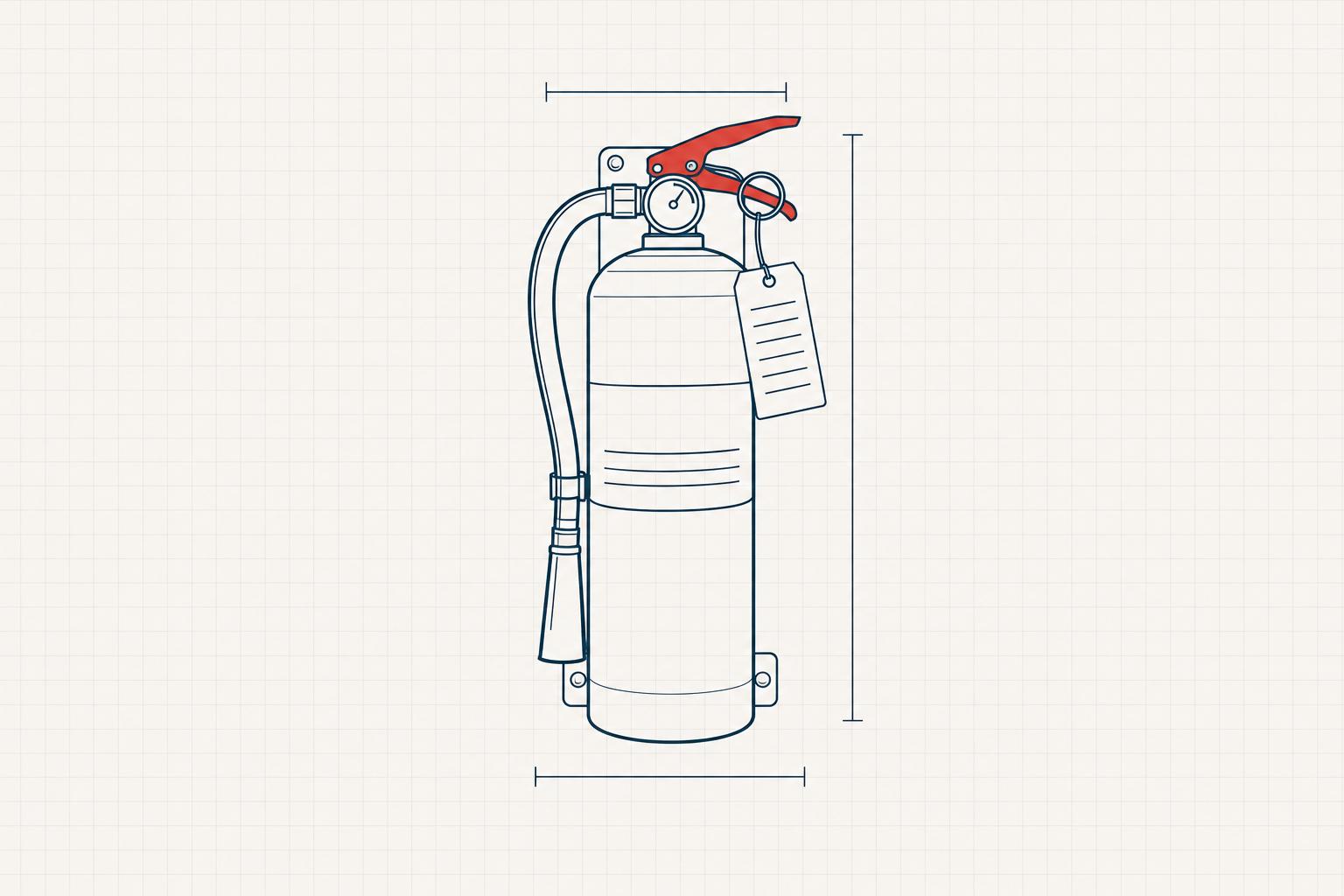
A fire extinguisher service visit is a technician checking every unit in your building: the gauge, the pin, the bracket, the tag and the date stamps. An exchange puts a serviced unit in date back on the wall while yours goes to the shop. Inspectors flag blocked units, missing units and expired tags.
What a fire extinguisher service visit covers
The technician walks the whole floor, not just the unit by the front door. Every device gets looked at. No sampling. The count matters more than the condition of any single unit, because a missing extinguisher is a finding and a dirty one usually is not.
At each unit the technician checks the gauge, the pin and its seal, the hose and nozzle, the bracket, and the signage that marks the location. Then the tag. Then the written record.
You do not need to be there for all of it, but the technician needs access to the whole floor. Stock and furniture in front of a unit will not be moved. That is your job before the visit, and it comes back later in this post.
The contractor services the equipment. You keep the record. That split does not change.
Exchange or recharge: which one you get
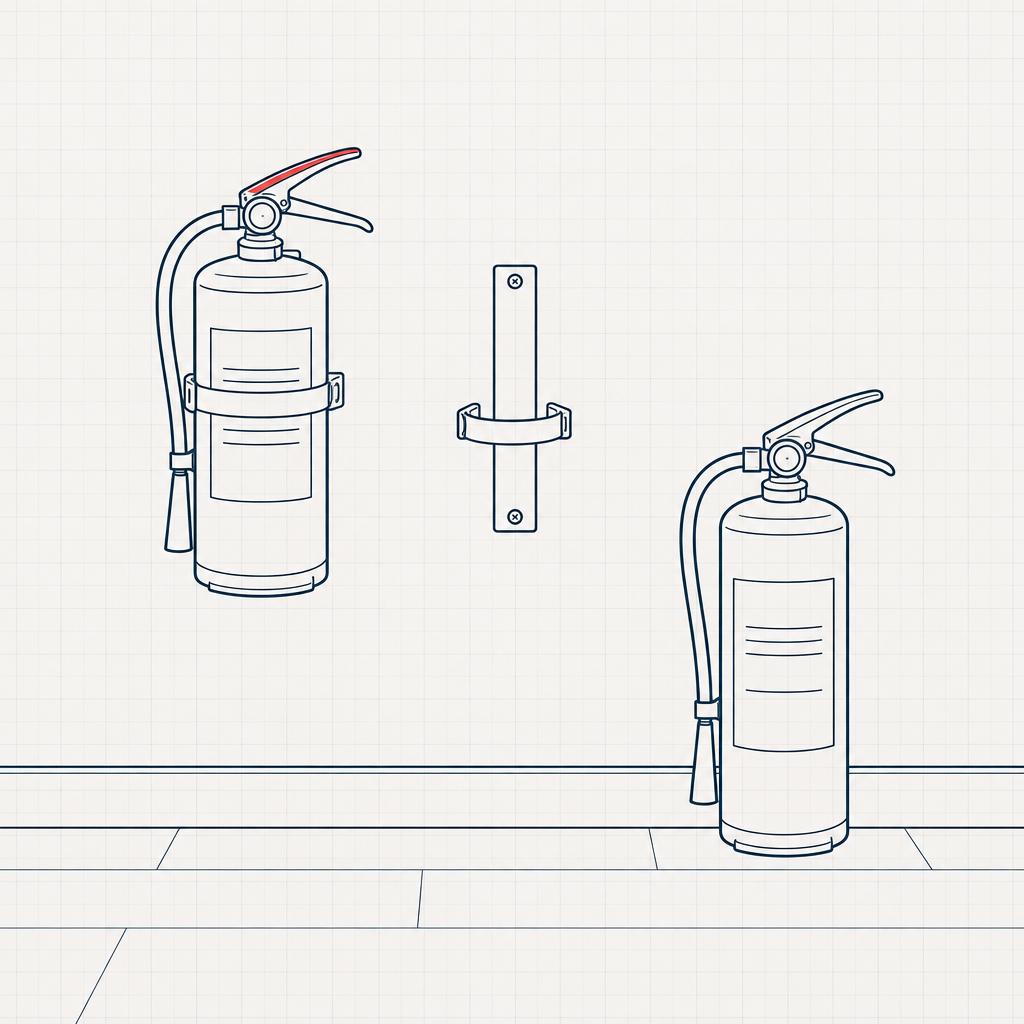
An exchange means a serviced unit in date goes onto your bracket, and the unit you owned goes back to a shop to be serviced, refilled or retired. A recharge means the technician works on your own cylinder, either at the building or after taking it away.
Both are legitimate. The difference you care about is whether the bracket sits empty, and whether the record follows the cylinder or the wall position.
A wall position is easier to track than a cylinder. When a unit is swapped, the serial number on your record changes. Write the serial number down, or photograph the label, before the visit. Then you can check the paperwork against the wall afterwards.
One caution. An exchange of a unit that is past its own service date is not compliance. The unit that goes onto the bracket must itself be in date, and the tag is what proves it. A discharged unit, even partly discharged, has to be recharged or replaced. Hanging it back on the bracket is not a fix.
A full cylinder with an old date stamp is still non-compliant. That is the interval question, and it comes up below.
Where a commercial cooking area is involved, the exchange has to match the hazard class. The violations section covers that in detail.
Before the work starts, ask one question: where does my cylinder go, and what comes back in its place. The answer tells you which route you are buying. For the service route, see fire extinguisher inspections.
The monthly check your staff signs
The monthly check is a visual one, and your own staff can do it. Someone stands in front of each unit and confirms:
- The gauge needle sits in the green.
- The pin is in place and the seal is intact.
- The tag is initialled and dated.
- Access is clear, with nothing stacked in front.
- The cylinder has no dents, and the hose and nozzle are intact and not cracked.
Three lapses turn a ticked box into a finding. The unit gets moved behind a stack of pallets or a rack of stock. The tag gets initialled in a batch at month end by someone who never walked the floor. The unit comes off its bracket for cleaning and never goes back.
The person doing the check does not need to be a technician. They do need to actually stand in front of the unit.
The Ontario Fire Code is the floor, and the fire department that has jurisdiction sets the expectation for your building. If you are holding a deficiency list, send it to us and we will read it before anyone arrives.
The monthly date is the smallest one on the tag. The annual service and the dated intervals behind it are the contractor's work.
The six-year service and the twelve-year test
Look at the tag on the neck of any unit. It carries the month and year of the last service and the next one due. You can read it without training.
Two longer intervals sit behind those dates.
The six-year maintenance service is where the unit is emptied, opened and serviced. The twelve-year hydrostatic test is where the cylinder is pressure tested, then either returned to service or retired.
The test is about the cylinder itself, not about whether the extinguisher would work today. A cylinder has a service life.
Dates are per unit. A building with units bought in different years has several different due dates, which is exactly why the record matters more than memory.
Where a unit is past its date, the answer may be a service, a test or a replacement. The technician should tell you which, and why, before any work is done.
Fire extinguisher violations inspectors flag most often
This is the list to walk your own building with before anyone arrives.
No unit where the hazard needs one. A storage room, a workshop or a kitchen area without an extinguisher nearby is a finding, even if the rest of the floor is well covered.
The wrong class for the hazard. Hazard class is a shorthand for what is burning. A commercial cooking area holding a general purpose dry chemical unit is the classic mismatch. Grease fires need a wet chemical unit. Dry chemical will not do the job, and an inspector will write it down.
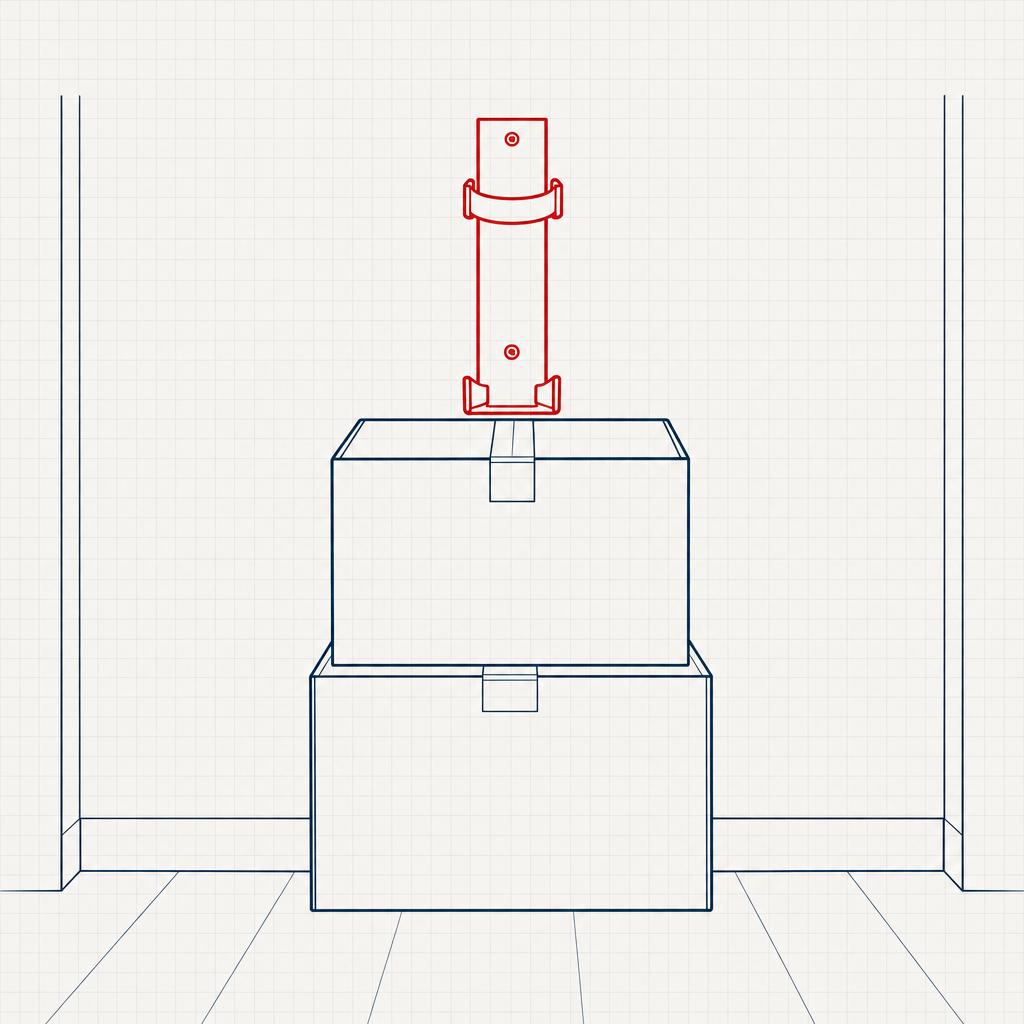
A unit you cannot reach. Behind a till, under a counter, on the floor behind stock. If a person has to move something to get to it, it is not accessible.
A missing or unreadable tag. A tag written in pencil and rubbed illegible is the same as no tag. So is a tag with no initials.
A unit past its service date. The gauge can be in the green and the unit still out of date. Age is its own requirement.
A bracket at the wrong height. Too high to reach, or too low to lift clear.
No signage marking the location. A unit nobody can find in smoke is a unit that does not get used.
A cabinet locked with no key available. If the key is in a drawer in an office, the cabinet is locked.
A discharged unit hung back on the bracket. Someone used it, and it went back on the wall. It has to be recharged or replaced.
A unit on the wall but not on the fire safety plan or the record. The equipment exists and the paperwork does not. That gap gets read as a gap.
Requirements differ between municipalities. A list from a neighbouring city is not a rule for yours. The fire department that has jurisdiction has the final say on what your building needs, and no contractor can overrule that. If you have received an order to comply, do not treat it as optional. Bring it to fire code consulting and have someone read it with you.
Before the contractor arrives, walk the floor with your phone. Photograph every unit in place. Compare the count against your record.
What proof you should be holding afterwards
A completed visit should leave you with four things. A tag on each unit with the date and the initials. A report listing every device and its condition. Deficiencies written out, not mentioned on the way out the door. And a copy kept on site.
Completed inspection reports are forwarded to the fire department. Keep your own copy anyway. The file is what proves the work happened.
The record should match the wall. If the report lists nine units and the floor has eleven, the file is wrong, and it will be read as wrong.
A report written against a template with no device detail is worth very little six months later when someone asks. See inspection reports and documentation for what that file should contain.
The choice in front of you is simple. A contractor who leaves a file, or a contractor who leaves a sticker.
Finding extinguisher service near you
The fire department that has jurisdiction is local, and the work gets scheduled around what that department expects. A firm based in the region can be on site for the annual work and can be reached when a unit is discharged, without you explaining the geography each time.
Four questions sort most contractors quickly. Who reads the report. What happens to a cylinder on exchange. Whether the monthly check is included or your own job. And whether you get the record in writing.
One local detail worth knowing. A building in Bowmanville answers to Clarington Emergency and Fire Services. A building in Ajax answers to Ajax Fire and Emergency Services. The paperwork and the expectations are not identical across the region, and a contractor who works both knows the difference.
For planned work, request a quote. For Oshawa buildings specifically, see fire extinguisher inspections in Oshawa.
Questions owners ask before booking
Is the monthly check my job or the contractor's?
Yours. The monthly check is a look at each unit, initialled and dated on the tag. The contractor handles the annual maintenance and the dated servicing. The fire department that has jurisdiction sets the expectation for your building.
Does an exchange mean I lose my own cylinder?
Usually yes. A serviced unit in date goes onto your bracket and yours goes to a shop. Ask where your cylinder goes and what comes back before the work starts, and record the serial number first.
How do I read the date on the tag?
The tag shows the month and year of the last service and the next one due. You can read it without training. If the next due date has passed, the unit is out of date regardless of what the gauge says.
What if a unit has been discharged?
It has to be recharged or replaced. A partly used extinguisher hung back on the bracket is a finding, not a repair. Do not put it back and hope the gauge looks acceptable.
Can a full cylinder still be out of date?
Yes. The gauge only shows pressure. The six-year service and the twelve-year hydrostatic test are about the cylinder itself, and a unit can be full and still past its date.
Who has the final say if my contractor and a fire inspector disagree?
The fire department that has jurisdiction. The Ontario Fire Code is the floor, and enforcement is local. A contractor can explain the requirement and argue a demand that does not hold up, but the department decides.
Get your extinguishers looked at
If the work is planned, request a quote and tell us the building and what you need looked at. If you are holding an order to comply with a date on it, contact us instead and send us the order.
Alex Harris runs Harex Inc., a family-owned fire protection company founded in 1983. He is the second generation to do so.